Wednesday, 22 April 2015

New technologies can be used to de campaign xenophobia

South Africans are reluctantly violating human rights because they do not know if immigrants can be stopped from crowding their country so they have adopted the attitude “get rid of foreigners”.

There has been so much talk as to why fellow South Africans are behaving in a manner that they do. The ongoing xenophobic attacks have consumed the lives of our relatives, friends, workmates, neighbors and fellow Africans.

Many foreigners are being butchered in the hands of the South Africans all because the locals feel like the foreigners are occupying all the job opportunities that come along the way and also overpopulating the country.

However the South Africans are failing to understand that some economies are encountering economic hardships and hence migrating to South Africa so as to seek a better livelihood

Such acts are a drawback to socio-political relations, economic development. The attacks have made foreigners to experience gross dehumanization for being aliens in a foreign land.


This crisis caused by high expectations and ignorance of a people is perceived as a direct threat to future economic health. According to sources on the internet it has rocked the image of new SA after a new era of multicultural society living in peaceful co-existence.

After all the weeping and wailing we have to be objective and come up with possible solutions to this. This crisis needs serious attention, both from South Africans, mother countries of immigrants and the international community if possible.

Anti-xenophobic campaigns nationwide are needed and people could use social media to push leaders into action because the experience of hostility may generate further hostility which is abnormal and unhealthy.

The media should also play its role and its responsibility to bring such issues into light in a manner that address the crisis .SABC news is just giving commentary and reports on what is transpiring. At this moment what is needed is a powerful, independent media which has the people at its heart.

African governments should come up with measures to curb citizens from migrating; employment creation and accountability can be a solution that might stop people from fleeing their countries.

Social media platforms have proven to be influential, the internet based platforms have decentralised information centers .Therefore people should utilise this opportunity to fight against human rights abuse.

Sitting back and cry is not working whilist technology allows one to speak out their minds. They have increased the public sphere and democratised it in a way that every jack and jim who is connected to the internet can point out something that might be helpful.


Wednesday, 15 April 2015

TECHNOLOGY DEVELOPMENT CONTINUES

During the 19th century, science progressed rapidly. Consequently, technology also progressed rapidly. The major technological developments during this period. The interrelationship between science and technology became firmly established in the 19th century. New technologies emerged which incorporated a number of scientific principles. Examples of this are Davy’s safety lamp and electric generator.
When a number of scientific principles became known, several of these principles were applied to manufacture a sophisticated machine. For example, an electric generator involves the principles of electricity, mechanical engineering, heat conduction, etc.
During this period better engines and machines were developed. Alternate sources of energy were found. This led to large scale industrialization across Europe and America. Now it was possible to produce goods on a mass scale. Take the example of cloth produced on a hand operated loom. It takes a long time to weave a few meters of cloth. However, a power-operated loom can produce cloth at a higher speed and requires fewer workers.

Zimbabwe's technology journey

locomotive

Independence day is upon us and with it we are caused to reflect on our history. Colonization itself is viewed with universal disapproval whilst the only undisputed advantageous outcome of colonisation was the technology brought into the country as a result.The indigenous peoples had their own social and cultural  systems  which   had   hardly  changed  for centuries.There were  no written  communications; no use was made of the wheel or the plough. In fact agriculture was designed merely to provide a basic subsistence. 

To this day the development of home grown solutions still remains rather slow and marginal.For most people before the19th century farming was an arduous backbreaking task done by the hoe. It is rather strange that the use of cattle for tillage coincides with the arrival of the colonialists more so since the ox-drawn plough itself is an African invention and had been in use for several millennia.

 Around June 1902 the Matopos dam, the first dam in this country was completed, the seed for Zimbabwe’s rise as an agricultural nation had been sown. Irrigation was now practised at a large scale and towns could now be supplied with water and ablution services. Modest technological advancements as they were there were the foundation to our nation and form the spine of whatever technological advancements have been made since.Today there are over 80 dams in the country.
for more details visit 

Econet is a life saver to many Zimbabweans

Many Zimbabweans have been living under fear of not knowing how their friends and relatives are in different parts of the world but now with services from Econet we are all connected'

Ecnet Wireless services is the largest mobile service provider in Zimbabwe . It has offered people an opportunity to stay connected which is life changing.It goes along with their tagline of changing lives

it is known for its innovativeness as it always come up with new innovations that are helpful.Ecocash, ecoschool and the recently incoporated subsidiary ecosure are the products of econet that have proven to be lifechanging

Steps towards achieving Millenium Development Goals through advancement of technology

2015 was set to be the year of celebrating completion and achieving Millenium Development Goals, however because of different reasons and difficulties faced by African countries this became impossible to happen 

The expansion of technological development in response to water resource issues includes innovations in filtration and sterilization systems, water waste-saving devices, and advances in economically viable desalination systems for coastal cities (UNESCO, 2009). Promoting these developments at the household level has the potential to benefit millions. As access to information and communications technologies improves, more and more communities are able to benefit from technologies that can immediately transform their lives and living conditions.

One eighth of the world's population lacks access to safe drinking water (United Nations Children’s Fund [UNICEF], 2008). Millions die every year from waterborne (bacteria-contaminated water) and waterwashed (insufficient water for washing and personal hygiene) related diseases (Prüss-Üstün et al., 2008). Diarrhea alone, a life-threatening symptom of a number of waterborne diseases such as typhoid, cholera, and bacillary dysentery, kills 1.5 million people every year - most of them children under the age of five (Prüss-Üstün et al., 2008). Malnourished children are at greater risk.

Access to clean water is a key factor in reducing poverty, improving health and achieving sustainable development. Freeing women and young girls from the back-breaking work of travelling long distances to collect water contributes to achieving gender equity and improves economic possibilities for families, as women have more time for income-generating activities, and young girls can attend school (Watkins et al., 2006). Improved health from contamination-free water not only promises a better quality of life, but eases pressure on heathcare systems, and can drastically reduce the number of work days missed from ill health. The United Nations Educational, Scientific, and Cultural Organization (UNESCO) reports that overall economic losses in Africa connected to a lack of access to safe water and basic sanitation is an estimated $28.4 billion a year (2009).
United Nations Millennium Development Goal (MDG) 7 aims to halve the number of people without sustainable access to safe drinking water and basic sanitation before 2015, leaving much to be done as this deadline approaches.
Bibliography
Clasen, T. (2009). Scaling up household water treatment among low-income populations Geneva: World Health Organization.
Progress on drinking water and sanitation: special focus on sanitation. (2008). New York, NY: UNICEF.
Prüss-Üstün, A., Bos, R., Gore, F., & Bartram, J. (2008). Safer water, better health: costs, benefits and sustainability of interventions to protect and promote health. Geneva: World Health Organization.
The 3rd United Nations World Water Development Report water in a changing world. (2009). Paris, France: United Nations Educational, Scientific, and Cultural Organization (UNESCO).

Monday, 13 April 2015

THE ARDUINO WORKSHOP TO BE HELD IN HARARE

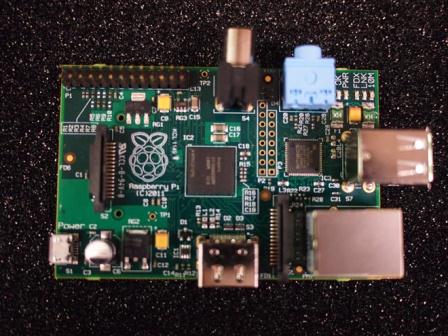
Raspberry PiSeta school kidIt is great being introduced to science and technology at a young age. Do you remember that moment you used a computer for the very first time, or the first time you played Tetris or Snake? How fascinating was that?
I have fond memories of my earliest encounter with a computer, it was a 386 PC and it ran Windows 3.1. I would spend days on end fiddling with the spreadsheet software and playing Minesweeper, trying to figure out how everything worked. It was those early moments with technology that ignited my love for computing and anything science related.
The world we live in is immensely dependent on technology and that means we require a more technically skilled workforce to produce and maintain the existing technology

Tuesday, 7 April 2015

DStv reduces bouquet prices as MultiChoice buckles under pressure (update)

DStv Decoderf you make the right amount of noise your cries just might be heard. Well, that’s the lesson from MulticChoice anyway. The media giant has reduced the prices of it’s DStv bouquets across all African markets.
With effect from the 1st of May 2015, the prices of all DStv packages will be drastically reduced. Some packages like HD PVR Premium, DStv Premium and DStv Compact Plus have been reduced by 40% while DStv Access, DStv Family and DStv Compact have been reduced by 15%. This means that you can access SuperSport for only $33 a month! The Xtra View Access Fee remains uwww.techzim.co.zwnchanged.

Monday, 6 April 2015

Primary students enrols in computer studies

The spread of new technologies in schools has seen a good pass rate in the past few years.The introduction of computers in primary schools is seen as a good move in educating young people .

Many young people have shown interest in computer studies, Mtshede Primary school,located in Njube suburbs is one of the most digitalised primary schools in Zimbabwe .

Located in Western surbubs but still beats schools in town by technology .Last year they built a large computer lab which they filled with more than 50 computers which are connected to the internet .

The school has set a right move in digital advancements and it has given an opportunity to infants to be well vexed with digital era.

Grade 1 to 7 students showed enthusiasm in enrolling in computer studies which is seen as embracing the technology.